The Questions I Still Carry About My Uncle Brian

The following reflection was written by Prison Yoga Project Board Member Lindsey Athanasiou. At Prison Yoga Project, we often share stories that help illuminate the humanity of people impacted by incarceration and the experiences that inspire our commitment to this work. We are deeply grateful to Lindsey for sharing the story of her Uncle Brian—a beloved family member whose life was shaped by trauma, addiction, incarceration, and, ultimately, profound loss.
As Lindsey reflects on the questions she still carries about her uncle’s time in prison, she invites us to consider what healing opportunities were missing, and what becomes possible when people are offered the tools, support, and compassion they deserve. We are honored to share her story and remain committed to reaching people like Brian, whose lives remind us why this work matters.
By Lindsey Athanasiou, PYP Board Member
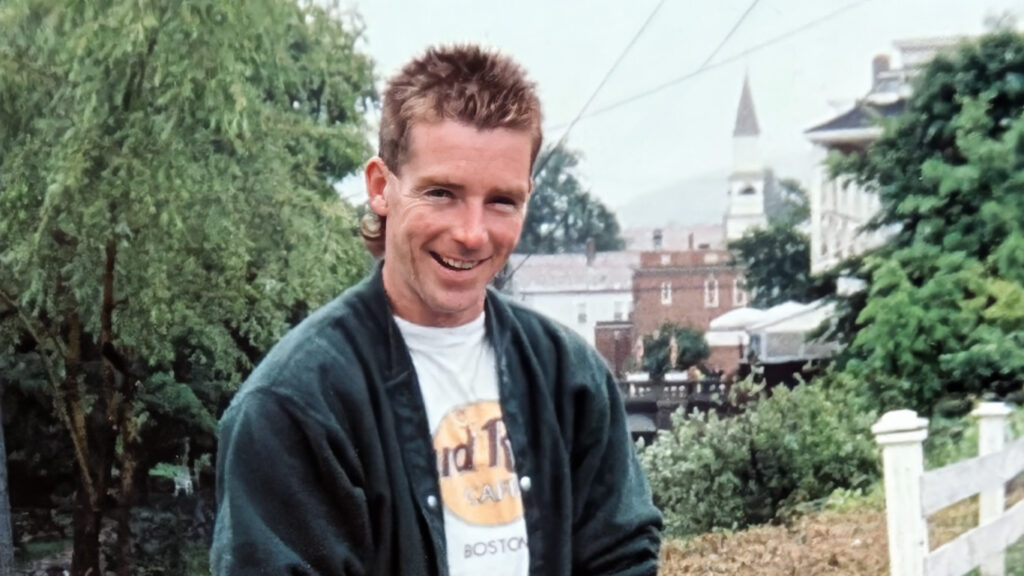
My Uncle Brian was a music lover, a talented athlete, and a die-hard Irishman. My fondest memories of him are Saturday mornings in the 90s, when he would swing by our house with mine and my sisters’ favorite surprise: McDonald’s breakfast. I can still smell the fluffy hotcakes and the deliciously greasy sausage patties mixed with his pungent aftershave. My uncle loved to make us laugh and would re-tell childhood stories that would bring happy tears to my mom’s eyes. He was witty, energetic, and multi-faceted. He was also a survivor of physical and emotional abuse who struggled with mental health and addiction challenges. He was a convicted criminal. He died by suicide seven years after his release from federal prison, six years ago this coming September.
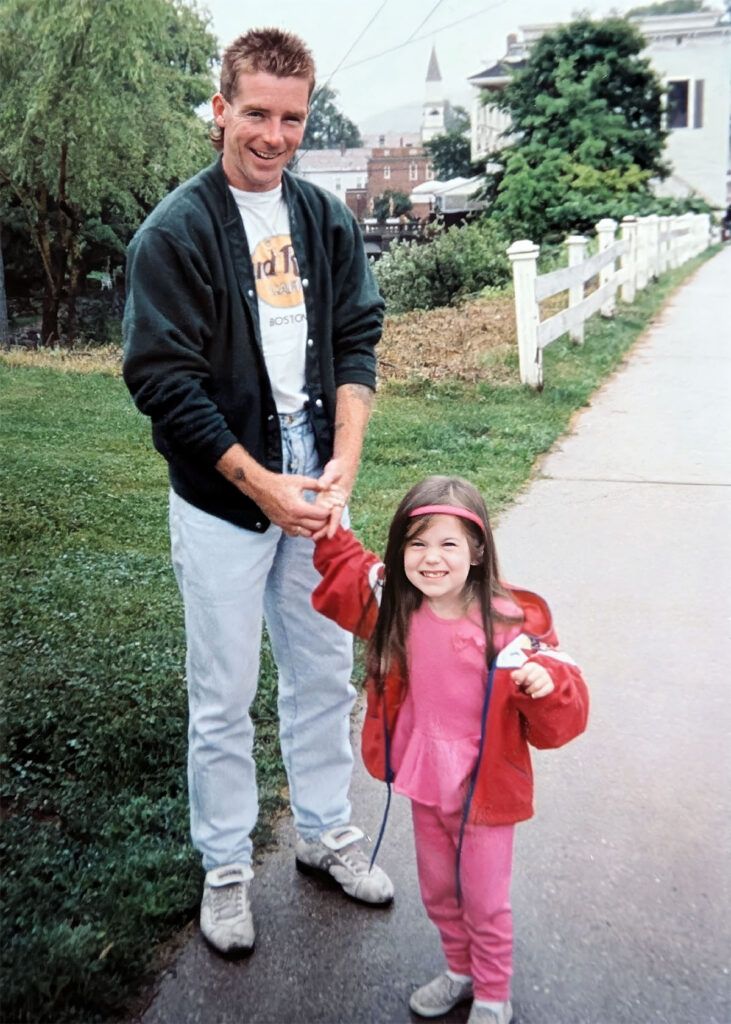
In the complicated relationship many families have with a family member struggling with addiction and repeat incarceration, I never really got to know my uncle. Part of this was intentional on my parents’ part—to protect their girls from the heartache and the dangers he brought into my mom’s and our lives over the years. Part of it was due to shame—the dialogue around addiction and crime in the 90s and early 2000s was not forgiving, and psychiatry and research that linked childhood trauma to adverse outcomes in adulthood had not yet been well-researched or made mainstream. My uncle was labeled a bad kid when he “couldn’t sit still” at school in the 1960s before ADHD was a common, wholly treatable diagnosis. This prophecy became his life, trying to be good, but ultimately always being “bad.” Add to this having alcoholic parents, one of whom was regularly abusive, and you can easily picture a kid who never really had a chance.
My mom has told me that over the years, my uncle sought help via Alcoholics Anonymous as well as through therapy. Different people who came into his life saw something in him and tried to help him with job opportunities and specialized programs during his shorter periods of incarceration. I believe these kind souls saw what we saw: the man who stopped his car in the middle of the street while on a date, to rush an injured cat to a nearby vet; the red-haired, freckled goofball we called “Uncle Brian.”
After years of non-contact, I made the decision to write to my uncle while I was in college. I had begun studying Sociology and my eyes were opened to the cycles of trauma, abuse, and addiction that my uncle was born into and, to my knowledge, wasn’t offered the tools he needed to ultimately escape. At the time, he was incarcerated at FCI Yazoo City Low, a low security federal correctional facility in rural Mississippi. He was nearing the end of his 14-year sentence, having served years in higher security facilities across the U.S. and being offered parole for good behavior three years ahead of his scheduled release. It was through these pen-pal-style correspondences (yes, via stamped envelopes written with old-fashioned pen and paper), that I began to know my uncle as a person. He shared what music he listened to (he was very fond of Kings of Leon who were newly popular at the time), what books he was reading (where I learned we shared a love for Kurt Vonnegut’s fiction), and what his days looked like (a lot of exercise and maximizing time outdoors). He had his friend draw on each envelope mailed to me, manifesting as beautiful pencil art of floral and abstract designs. He asked what college was like – he had dropped out of high school but later completed his GED – and in every letter, he told me how proud of me he was. His penmanship was absolutely flawless and I recall poking fun of him for it, revealing my own insecurities at my poor handwriting.
I know my uncle omitted much detail from his letters about what his time in prison entailed. I am still actively seeking his federal inmate records so that I may put more pieces of his incarceration puzzle together. Did he have a job and if so, doing what? Were there many lockdowns in his facility and how did he endure? What relationships did he have with correctional staff? What types of support did he have access to?
The last question has been on a five-year loop in my brain, and is the driving reason I work with Prison Yoga Project. Beyond just the question of supports in prison, I really want to know: Did my uncle ever try yoga? Was he ever invited to embody himself, to regulate his nervous system, to breathe in community with others? Did he ever have the chance to silence the dark, self-defeating voices, and just be?
I don’t think I’ll ever learn the answers to these questions. I do know that his life could have looked very different had he participated in a program like Prison Yoga Project.
When my uncle was released in 2013, he transitioned to group living. For seven years he struggled to find his footing in the world, which looked quite different than when he began his sentence 11 years before. His demons and the underlying trauma that caused them had not been addressed (and were perhaps stoked and worsened while imprisoned), and so they overtook him. He returned to a life of drugs and petty crime in his late 50s. I believe the weight of his shame, his regrets, and his circumstances were too much for him to bear, and I don’t blame him.
I wish my uncle had been told by a therapist or trauma-informed facilitator that he was never the problem; that he had been victimized, misunderstood, and mislabeled his whole life. That there was a way to move beyond the false identity he had fallen into and forgive himself as well as those who had failed him at a vulnerable age. I wish he was offered a safe space to let down his defenses and focus on his breath. Through that inner work, he may have found his light and been able to build a better life for himself upon release from prison.
I picture what his life would be at 63 today, had Uncle Brian found and embraced the benefits of such an inward lens while incarcerated. He would be working again for our cousin, happily washing windows on Boston’s most beautiful high-rise buildings. He would have been present to care for his mother, my Nana, and jointly grieve her passing with my mother. He would regularly join us for family birthdays and holiday dinners, encouraging us to play Electric Light Orchestra and R.E.M. while eating boiled corned beef and cabbage. Maybe we’d even go to yoga together. And he would definitely swing by on Saturday mornings to surprise my daughter with McDonald’s breakfast.
Prison Yoga Project’s human-centered approach to helping people heal in prison gives me hope that someone like my uncle can and will get a second chance. A reset button. Self-forgiveness and self-investment. I carry his memory with me and honor him with my involvement in the cause. If you believe in the power of healing over punishment, I invite you to share and invest in this transformative work with me.
Rest in peace, Uncle Brian.
Responses