
Inside Pendleton Prison, Five New Yoga Teachers Are Ready to Give Back

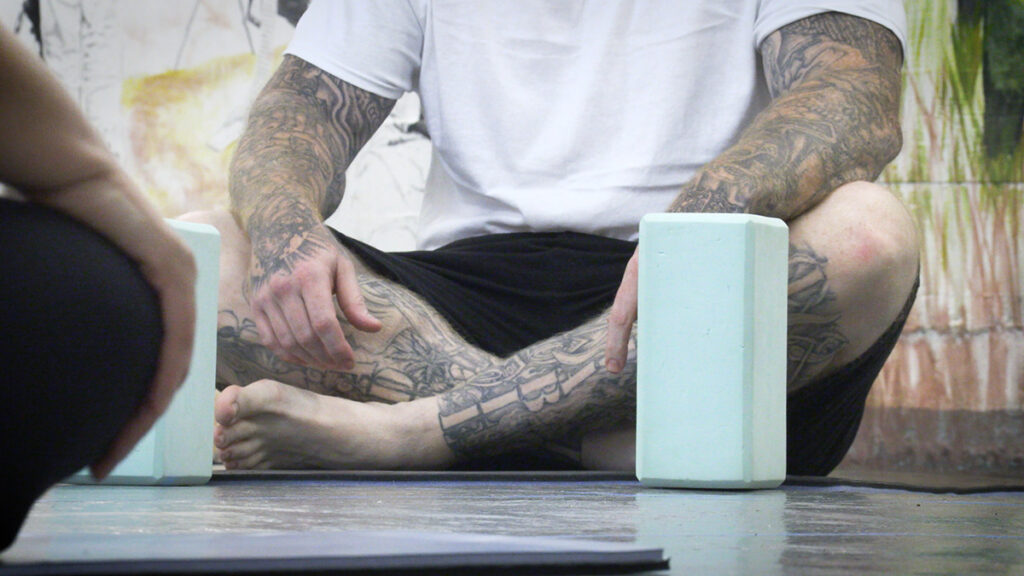
One year.
A few hours together every Friday, along with daily work in between classes.
Six individuals came into this 200-hour Yoga Teacher Training not necessarily close. They left as their own community. They ranged in age from 29 to 50. They came from different walks of life, with different pasts. Different bodies, different injuries, different scars. So many different stories. But somewhere over the course of that year, they found a singular path forward:
Service.
That’s a common story in PYP communities inside the walls. We all have pasts. We all have scars. We all have trauma. The difference is that we work hard to create a safe space where those things can be shared, examined, and given room to heal. I was honored to meet these folks. Honored to share all of these moments with them.
And there were so many moments.
In the beginning, I witnessed curiosity mixed with nerves. There was uncertainty and disbelief in their ability to complete a course filled with history, technical knowledge, philosophy, anatomy, and concepts that were completely new to many of them.
There was fear.
There were six individuals trying to figure out exactly what they had gotten themselves into, and trying to figure out one another. Over time, I watched those nerves and that fear grow into confidence and healthy curiosity. I watched their focus take shape. I watched six individuals become a community.
One year after Day One, five individuals graduated from the program with their nationally recognized 200-hour yoga teacher certification. One individual left the program early because, after 28 years at Pendleton, he had the opportunity to level down to another facility.
But there was something different about completing a Yoga Teacher Training inside these walls.
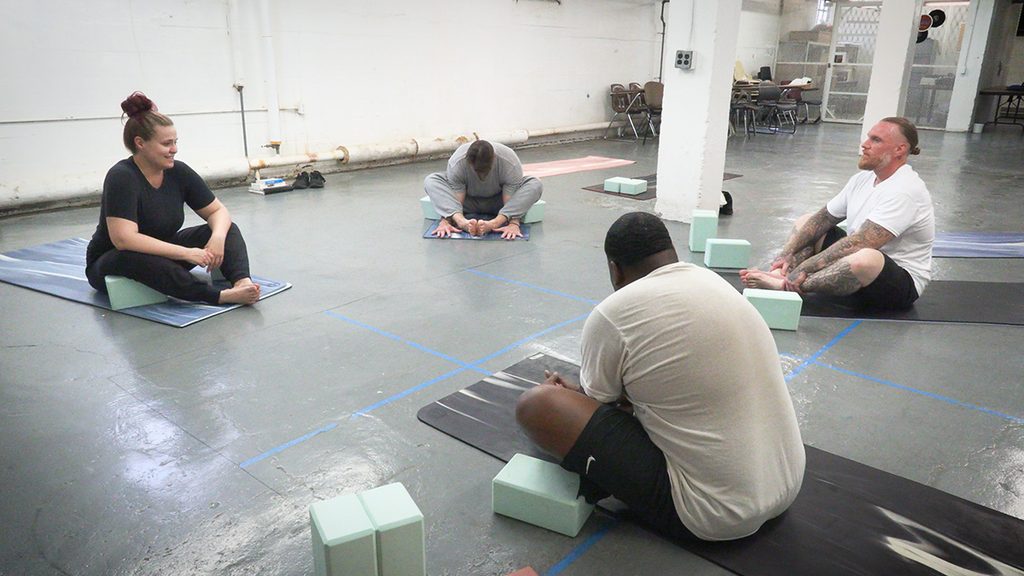
These individuals needed to have a purpose in mind for their certification. This had to be part of a plan, a plan to give back to their communities, including specific populations within the incarcerated community at Pendleton. At the beginning, we didn’t know exactly what that would look like. Throughout the year, Programs Director Richard Latour and I listened to the YTT participants’ goals. We explored possible spaces within Pendleton where they could serve and considered departments and programs that could become partners.
We were building something without knowing exactly what it would become.
And while all of this was happening, Pendleton itself was changing.
Halfway through the course, Warden Cole and Deputy Warden Molly McCurdy stepped into leadership. Warden Cole worked his way up from Correctional Officer, holding many positions and witnessing many changes at Pendleton over the years. Deputy Warden McCurdy began her career as a CO at Indiana Women’s Prison, later served as Deputy Warden of Operations at Plainfield Correctional Facility, and most recently served as Deputy Warden at Pendleton Juvenile. Today, she oversees programming at Pendleton and is making positive changes every day.
I remember DW McCurdy’s first week.
She visited one of our regularly scheduled yoga classes and stayed to speak with the YTT participants. She asked each person one question:
“Why?”
And each of them answered. They shared their personal stories. They shared their purpose. They shared their why. She stayed and watched us work. She watched notes go up on an old chalkboard. She watched daily experience logs being turned in. She watched one-on-one conversations and group movement. She saw what this program actually looked like, not on paper, but in practice.
From that day forward, the PYP program has felt truly supported.
Then the year passed. The coursework was completed. The certifications were earned.
They did it.
So now what?
That may be the most important part of this story. Because the goal was never simply to create five certified yoga teachers inside a prison. The goal was to ask what happens when people are given education, tools, responsibility, trust, and then the opportunity to use those things in service to others.
And now we are beginning to see the answer.
One graduate is preparing to serve in Pendleton’s veteran population, working with the facility’s Legion post. His vision is to offer two-hour classes, one hour of movement followed by one hour of community conversation. Another graduate has a goal of working with mental health groups, serving a part of Pendleton where he was once a resident himself. Through their training, these individuals have come to understand how embodied movement can help prepare the body and nervous system for productive therapy, conversation, and group work.
One graduate came to YTT after recovering from severe sciatic pain caused by an injury. After experiencing his own healing, he began asking a different question: How can I serve the people who helped me heal? His answer was the infirmary. After speaking with others living with chronic low-back, hip, and sciatic pain, his purpose became clear. He wants to use what he has learned to support people experiencing the same kind of pain he once lived with and, in doing so, help support the staff and administration caring for them. After completing an additional 20-hour focused study in Embodied Recovery, he will be prepared to begin meeting those needs.
Another graduate is serving a community he is still part of today. He is in substance use recovery, and he now incorporates yoga into recovery meetings. After completing an additional 20-hour Yoga and 12-Step Recovery certification, he is building skills and leadership experience that he can carry with him when he is released in the next few years.
And our youngest graduate chose to focus on people living with very specific physical needs, including arthritis and sickle cell anemia. Before beginning YTT, he experienced multiple sickle cell attacks each year. During this year of deep study of yoga, movement, breath, self-awareness, and his own body, he experienced only one attack, and he reports that his recovery was significantly faster than it had been in the past. He attributes the change in his relationship with his health to what he learned through PYP’s YTT: how to listen to his body, how to recognize what he is feeling, and how to begin understanding why. Now he wants to take what he has learned and use it to serve others.
And maybe that is the impact moment. Not the certificates. Not the 200 hours. Not the final exam. Not even graduation. It is what happened after they were asked, “Why?”
Five people finished this training with five different answers. Veterans. Mental health. Chronic pain and physical recovery. Substance use recovery. Arthritis and sickle cell anemia.
They didn’t finish this program asking, “What can this certification do for me?”
They finished asking: “Who can I serve with what I now know?”
That is what education inside a correctional facility can do when it is paired with trust, purpose, and opportunity. It can turn lived experience into expertise. Pain into empathy. Knowledge into leadership. And healing into service.
A year ago, six individuals walked into a room on a Friday, unsure of themselves, unsure of one another, and unsure whether they could even complete what was in front of them.
Today, five nationally certified yoga teachers are preparing to serve communities within the very facility where they live.
They are not waiting until release to give back.
They are not waiting for someone else to decide that their experience has value.
They are taking what they have survived, what they have learned, and what they have built together, and turning it outward.
That is the impact. That is the result.
And that is what happens when we stop asking only what people inside prison need from us, and start asking what they are capable of giving to one another.
Turns out, the answer is a hell of a lot.
Responses