

James Lesly is Not Your Average Yogi
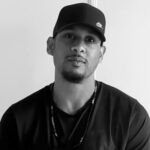
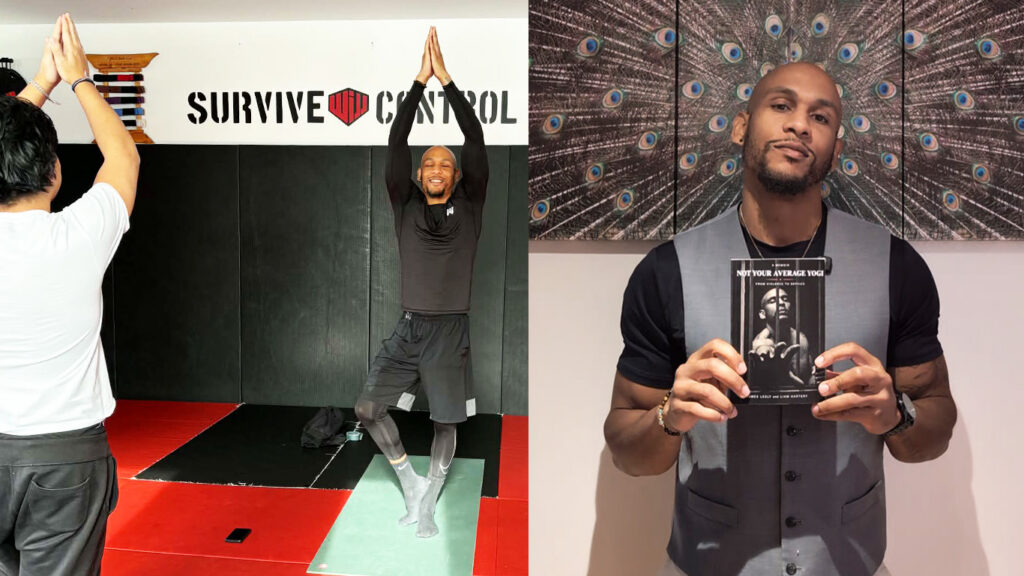
By James Lesly, Founder and Author of Not Your Average Yogi, PYP Ambassador, and Case Manager with Black Mental Health Canada.
I was born in Montreal to Haitian parents who came here for a better life. I was a sensitive kid. But where I grew up, being sensitive didn’t feel safe, so I learned to hide it. Like a lot of boys, I built a shell and called it strength.
That shell took me into the street. By my twenties, I was running my own crew, collecting debts and doing whatever paid. I was chasing the respect I never felt growing up. I didn’t know what to do with what I felt, so I learned to bury it.
When my son was born, I tried to step away from that life, and for a while I did. But I never dealt with what was underneath. I was carrying anger and hurt I’d never learned to face as a kid who experienced racism early and never felt like he belonged anywhere. Not Haitian enough, not Canadian enough. I numbed it with drinking and smoking. One night, I made a decision that seriously hurt another man, and I take responsibility for that.
I was thirty-one when I went in. I spent my first 46 days in solitary confinement, then years waiting for trial before ending up in the penitentiary. A little over four years in total. All of it without seeing my son.
What I remember most isn’t the violence. It’s the loneliness. And the moment I realized I couldn’t keep waiting for something outside me to fix what was broken inside.
So I started small. The penitentiary had a real library. I read everything I could get my hands on and copied what mattered into notebooks, because I never knew if I’d get that book again. I copied stretching routines too. Warrior One, Warrior Two.
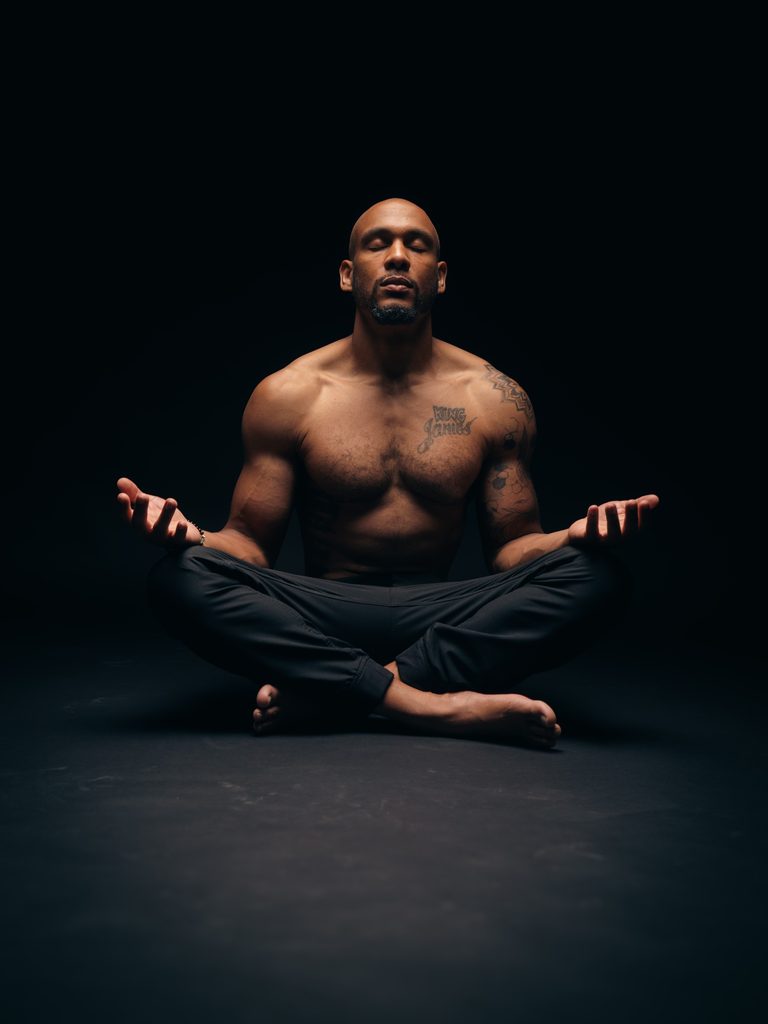
My breath was one thing they couldn’t take from me. I couldn’t change where I was, but I could begin to change how I responded to it. In solitary, I only had two emotions: extreme sadness or extreme anger. I’d look at pictures of my son and cry for hours. Other times, a guard’s hand through the food slot filled me with rage I couldn’t explain. Breathing gave me a middle ground. It was the first space I had between feeling something and reacting to it.
The day I was released, I cried the whole ride home. Years of holding everything in came out at once. That’s when I understood that the mind can compartmentalize everything, but the body remembers.
A few weeks after my release, I put a 200-hour teacher training on an old credit card. It was the first investment I ever made in myself.
About a year later, I reached out to Prison Yoga Project. I told them the truth: I had only recently come home, I had no money, but I had my training and I wanted to give back. My first training taught me poses and sequences. It didn’t teach me how to hold space for someone like me: a man coming home from prison, carrying trauma he’d never named. I wanted to bring yoga back to the places where it found me. They offered me a full scholarship. That meant more than they probably knew. For the first time, my past wasn’t a reason to keep me out of the room. It was a reason I belonged in it.
In May 2026, I completed PYP’s 200-hour Yoga, Social Justice, and Leadership training. It changed how I teach and how I live. I used to think yoga was about the shape of a pose. Now I understand it’s about how someone experiences the practice, and whether they get to make their own choices in it. I stopped assuming that closing their eyes or holding still would feel peaceful to them. I learned to offer choices instead of expecting everyone to experience the practice the same way.
What I took from the training, I hold onto every day:
From performance to presence. From control to curiosity. From instruction to invitation.
I’m not there to fix anyone. I’m there to make enough space that people can find their own way back to themselves.
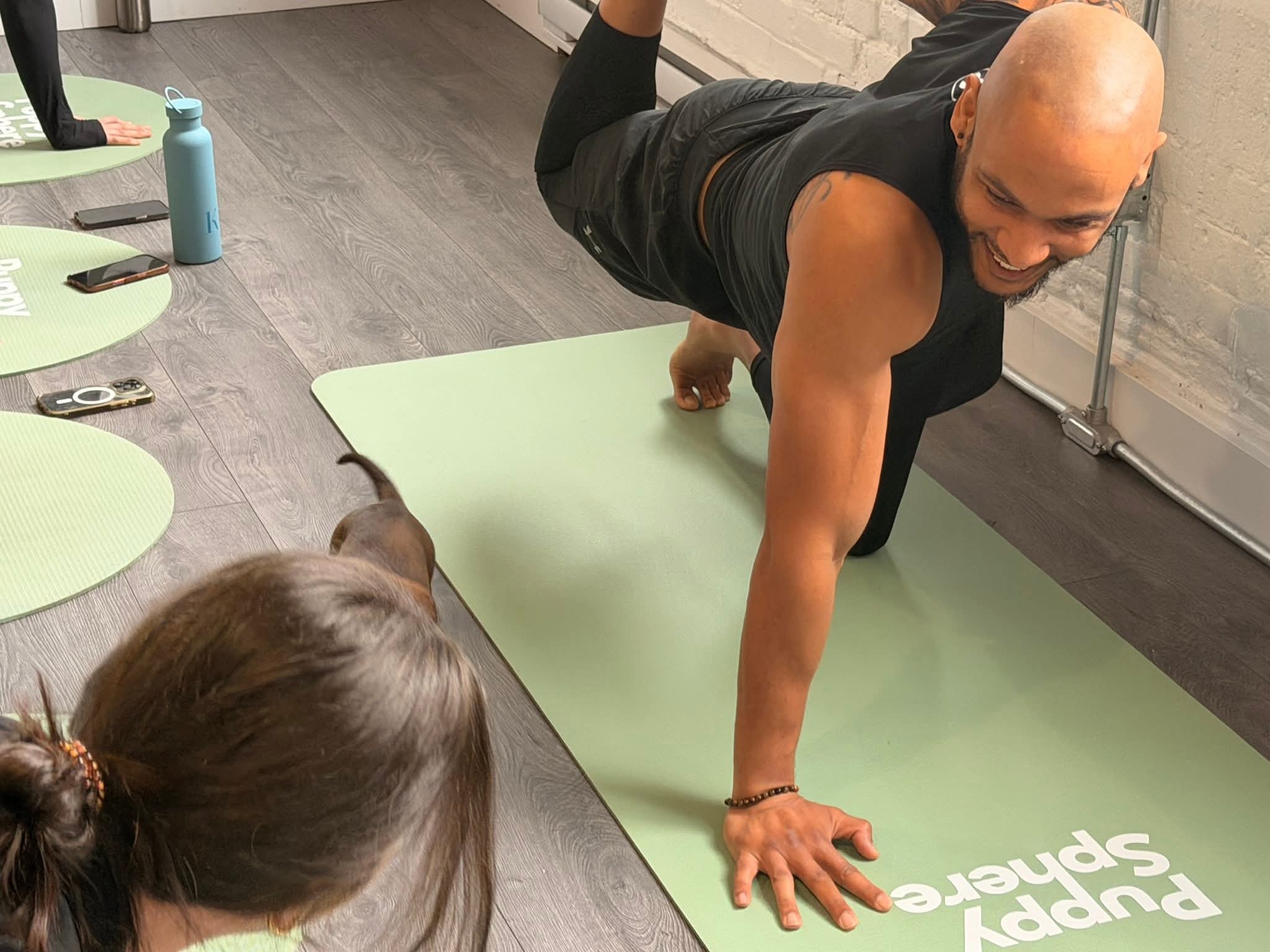
Today, I create spaces where men can talk about what they’re carrying without having to pretend they’re fine. As a case manager with Black Mental Health Canada, I also support people returning from incarceration who are navigating some of the same challenges I faced when I came home. And I have the honor of being a PYP Ambassador.
That’s my Seva. It’s me trying to be, for someone else, what I needed back then.
I recently wrote and published Not Your Average Yogi: From Violence to Service. This is my whole story, the hard parts and the healing. I wrote it for anyone who’s ever felt their past decides their future. Every chapter ends with a simple practice and reflection questions, so you’re not just reading my story; you’re working through your own.
My favorite part of writing it? It was like therapy for me. My mind had put a lot of things away a long time ago, but my body still remembered all of it. Writing gave me a chance to face things I’d spent years avoiding, and to begin letting some of them go.
The part of my life that means the most is my son. I told him my story myself. Sometimes we breathe together. I don’t push yoga on him. I just want him to know how to come back to himself when life gets loud. The father he knows today is someone I had to learn how to become.
If you’re inside right now, you are more than the worst thing you’ve done. And if you’re one of the teachers and volunteers who show up in those rooms, please keep going. Someone like me is sitting in the back, not saying much, and listening to every word.
For classes, workshops, and talks, visit James’s website: www.notyouraverageyogi.org
Instagram: @not_your_average_yogi
Help Someone Like James Find Their Path to Healing
Your gift helps make trauma-informed yoga, mindfulness, and opportunities for healing accessible to people impacted by incarceration.
Responses